What's in it for Fashion, Brexit?
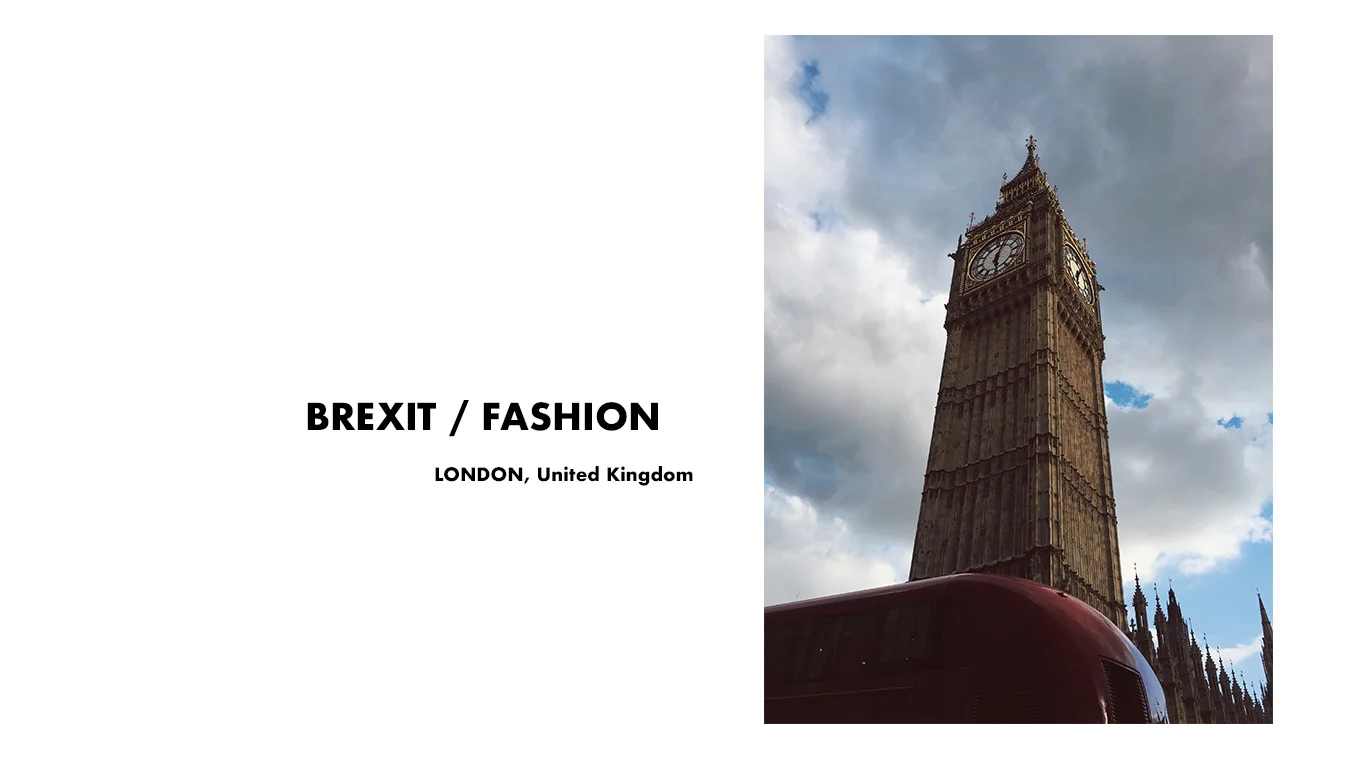
LONDON, United Kingdom -- Over recent activity involving retail in the United Kingdom, along with other European countries, is the movement of the economic markets for fashion industry with the succeeding actions of Brexit on the marketplace. From “Pros-to-Woes” of the transcending power forming in the UK, top people in fashion are considering what this could mean for progress in the industry. Many are asking questions about clothing brands value possibly deteriorating, or increasing? As Brexit takes a stand over the European Union there is concern for international brands still within the EU.
So, how could this change with Brexit affect the economic market for fashion industry? Well from an economic standing there could be a shift on the merchandise trade balance which could possibly affect imports/ exports of goods. Negatively, this impact would tip the balance if Brexit imposed a tariff on importing goods due for most oversea fabrics. With many of the international brands they source their products from other foreign vendors that have a greater quality and are possibly cheaper. With an increase tax, due to a tariff this could eliminate trading fabrics overseas to the UK and most European nations. Boutique stores that source from these vendors could find themselves in an economic supply decrease and would increase their demand, but everything would be ten times as costly.
As this merchandising trade balance becomes highly affected stock markets, in this vantage, could possibly plummet. From the Business of Fashion’s article on European fashion industry, recently, due to the British pound having a decrease in value could cause many to leave the industry, or get ready to shut down independent fashion retailers, or even bigger fashion houses. For example, one of the most prominent fashion retailers, Burberry, could see a dramatic fall in stock due to catastrophe and shift of power. In the worst scenario, prices could soar and demand would drop causing them to half to lower prices to sell at a steady rate of acceptable revenue. However, even then prices would continue to affect consumer mentality and could drive them to result to cheaper retailers.
In this state, if Brexit got its way with import and export tax increase on fabrics this could mean a possible lapse in avant-garde, or even luxury fashion.
Especially for A. P. C., an example of a brand with close ties and product that exports to London. With a tax imposed there would be little to no connection with A. P. C. due to expense. Many of the brands we hail from Paris and Milan would never surface in other countries. It would cause the brand to shut down all together if the price is greater than the average variable cost to operate.
So, what exactly could this mean for our TRISTYN? Well, in the “long-run” and other brands connected to Savile Row it wouldn’t harm the industry too much. For Savile Row, the headquarters for their tailors remain in London on Savile Row, while the manufacturers are in Northern Ireland. With Northern Ireland, they are independent of Britain, with no connection to the EU separation by the United Kingdom this means a working in favor of this bespoke suiting company.
It would work in favor to increase economy and grow ties with many retailers without the complexity that the UK deals with on Brexit. Overall, if Brexit does not impose this tax, economic and network growth for TRISTYN is foreseeable, along with continuous economic stability for Savile Row, and manufacturing costs would not alter. In an economic term, marginal cost would decrease and marginal revenue would increase.
The consumer surplus would steadily increase, an producer surplus would average a decrease. All this sounds good for the business, yet this can only be said if Brexit doesn’t impose the take.
Many of the variables are determined by on which direction Brexit decides the fate for fashion industry. Hopefully, in the coming year they reach a stance for a growth for fashion. Even if retail takes a plunder economically, fashion industry will progressively drive on for the best.